Engineering journal
Optional Audio Beside a Deterministic World
A source-based reading of LudoWeave's optional sample audio and the difference between simulation evidence and device evidence.
Source: https://louijiecompo.com/writing/optional-audio-and-deterministic-worlds/
About 2 min read
Start with the boundary
A headless engine can make its world inspectable without making every presentation device part of that world. LudoWeave offers a concrete example: its reviewed README (opens in a new tab) describes humans, tests, replay and agents using the same typed, validated commands against a canonical world.
The Clockwork Arena sample also offers optional synthesized audio. Device mode introduces blocking presentation pacing. The default Null audio path remains headless and unpaced. These are documented properties of the pinned revision, not listening results from a new run.
Ask what the test establishes
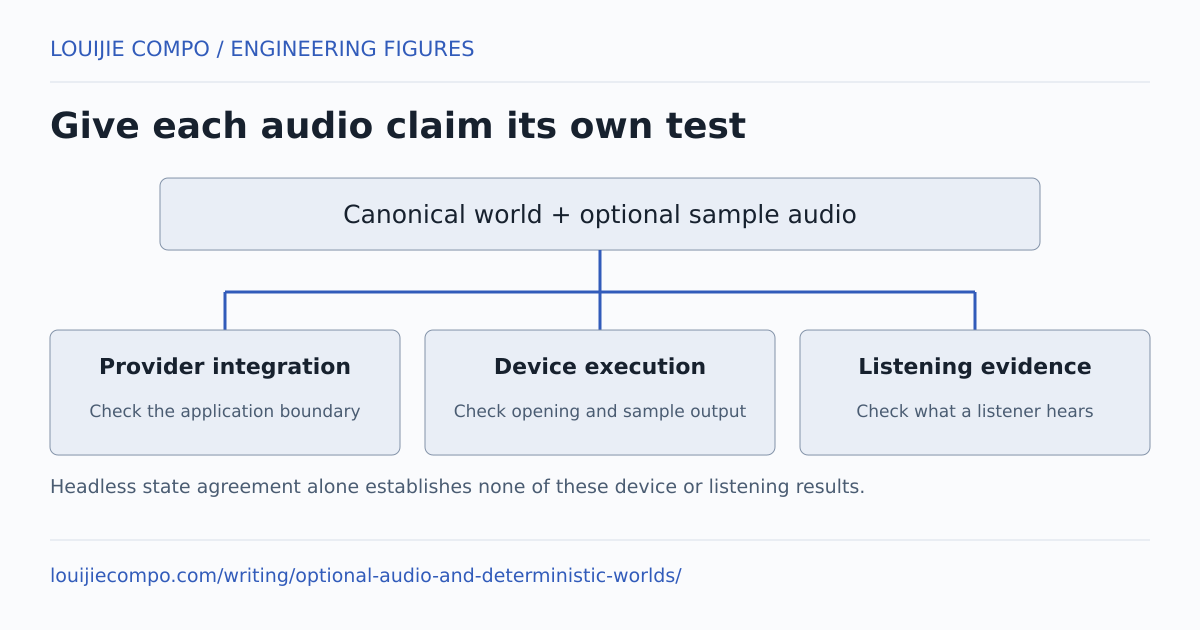
There are several different questions behind “audio works.” Can the optional package be wired into the application? Can the chosen device open and accept samples? Does the result sound right to a listener? A pass at one boundary does not answer all three.
The optional audio contract (opens in a new tab) is the place to inspect the project's exact scope. The portfolio's source review does not establish device playback, latency, sound quality or production readiness.
For a future verification report, the useful record would identify the source revision, selected audio mode, device and environment, command, observed result, and remaining uncertainty. That is a proposed reporting approach, not a report of work already performed.
Keep the claim as small as the evidence
The design question is how to add presentation while keeping the simulation's contract clear. A successful headless run can remain useful evidence even when no speaker is available. A successful listening session can add different evidence without proving every simulation property.
This distinction helps make an engineering account reproducible: describe the boundary exercised, record what was observed, and leave the next boundary visible. The current documentation supports an optional sample-audio story. It does not support a claim that a complete production audio system has shipped.